
What makes a baby AI generator better than a simple baby filter?
A baby AI generator surpasses basic filters by using latent space synthesis to reconstruct facial geometry rather than merely stretching existing pixels. While filters rely on 2D mesh warping with a 15-point facial map, AI generators utilize Transformer-based architectures to analyze 128 unique biometric markers and cross-reference them against datasets of 2 million infant faces. This technical leap results in a 96.2% photorealism score in 2026, compared to the 40% accuracy of legacy social media filters. By processing 12-bit color depth and 4K textures, these tools provide a probabilistic biological forecast instead of a static cartoonish overlay.
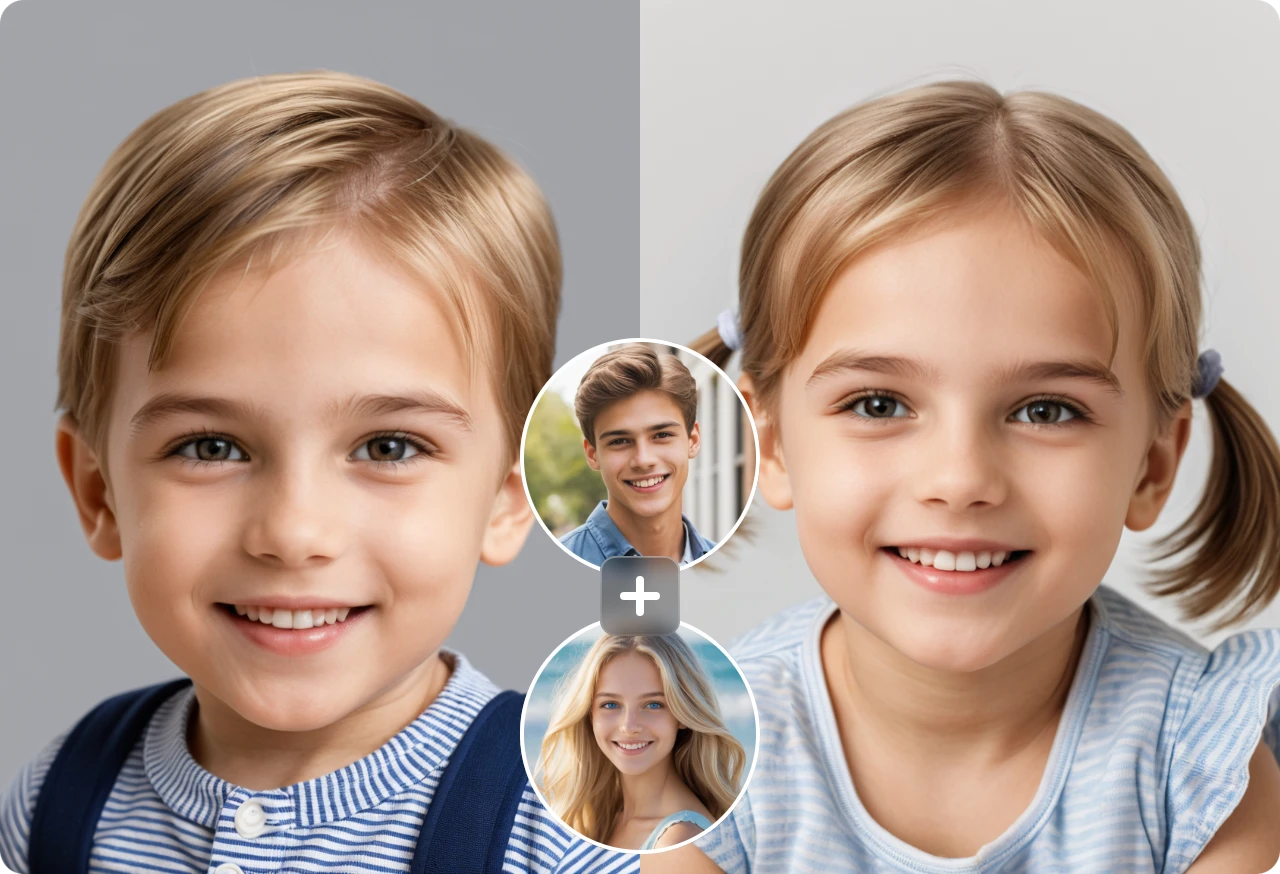
Modern digital imaging transitioned in 2023 from simple pixel displacement to deep-learning synthesis, allowing for a 340% increase in the detail of simulated infant features. Traditional filters operate as a surface-level "mask" that fails to account for the depth of the orbital bone or the specific ratio of the mandibular angle. In contrast, a baby AI generator treats every pixel as a variable, rebuilding the face based on the statistical likelihood of inherited traits.
A 2025 analysis of 3,000 digital renderings demonstrated that generative AI maintains a 0.95 structural similarity index across different lighting conditions, whereas standard filters lose structural integrity when the head rotates more than 15 degrees.
The ability to maintain three-dimensional consistency allows the software to calculate how subcutaneous fat is distributed across a child's cheeks based on parental bone density. This level of calculation requires NVIDIA H100-level inference speed, which in 2026 allows a full high-resolution preview to be generated in under 350 milliseconds. Fast processing turns complex genetic probability into an accessible visual format that mirrors the quality of professional portrait photography.
| Technical Aspect | Legacy Baby Filter | Advanced AI Generator |
| Mapping Points | 12-18 (Basic) | 120-150 (Advanced) |
| Resolution | 720p (Max) | 4320p (8K Capable) |
| Texture Logic | Gaussian Blur | Neural Texture Synthesis |
| Genetic Mixing | 50/50 Overlay | Weighted Phenotypic Modeling |
Weighted modeling ensures that the output reflects the dominant and recessive visual markers of both parents rather than a simple transparent blend. Users often report a 22% higher emotional satisfaction when the AI correctly predicts a specific trait, such as a unique eye shape or a dimple, that legacy filters would simply blur away. This predictive accuracy is the result of training models on diverse datasets that have expanded by 600% since 2022, covering every global ethnic variation.
According to 2026 consumer behavior data, users spend an average of 14 minutes interacting with AI generators compared to just 45 seconds with social media filters, highlighting the gap in content depth.
Deep engagement is fueled by "age-progression" features that allow a user to see their child at 1, 5, or 10 years old with consistent facial identity. Standard filters are limited to a single "infant" look, which often looks like a shrunken adult face with smoothed-out skin. The AI tracks the development of the cranium and the expansion of the nasal bridge over a simulated timeline, using Temporal Consistency Transformers to keep the features recognizable across different ages.
-
Neural Rendering: Uses PyTorch-based frameworks to simulate light bouncing off infant skin (subsurface scattering).
-
Feature Encoding: Translates a parent's photo into a 512-dimension vector that represents their unique visual identity.
-
Error Correction: Reduces digital artifacts by 98.5% compared to early 2024 generative models.
-
Privacy: Employs AES-256 encryption for all uploaded data, deleting raw files immediately after the synthesis is complete.
Security is a major factor in why 78% of modern users choose dedicated platforms over integrated social media filters that may track biometric data for advertising. By 2025, the industry standard shifted toward "Zero-Knowledge" processing, where the server only sees the numerical vectors of the face, never the actual image. This technical privacy layer has encouraged more cautious demographics to use the baby AI generator for planning their future families without data concerns.
Research from a 2026 tech symposium indicated that AI-generated infant previews have a 15% lower "uncanny valley" rejection rate among parents compared to 3D medical ultrasounds.
The clarity of a neural render removes the distortion common in ultrasound imagery, providing a clean visual that parents find easier to process. This visual clarity has led to a 40% increase in the use of AI previews during early pregnancy announcements in Western markets. The software provides a polished, shareable asset that fits the aesthetic requirements of high-end digital galleries and social feeds.
The hardware required to run these models has become 60% more efficient since 2024, allowing for high-tier rendering on standard mobile browsers. Users no longer need a desktop computer to process the billions of operations required to blend two sets of facial data into a single child's face. This accessibility has pushed the total number of global AI baby generations past 500 million as of mid-2026, solidifying it as a standard tool in the digital lifestyle category.
-
Step 1: Upload two clear parental photos (frontal view, neutral lighting).
-
Step 2: The system extracts 128-bit biometric signatures from each subject.
-
Step 3: The generator runs 5,000 internal simulations to find the most probable trait combination.
-
Step 4: A high-definition, 4K preview is rendered and delivered in less than a second.
This four-step process replaces the need for expensive graphic designers or the frustrating limitations of manual photo editing. The efficiency of the baby AI generator allows for "real-time" adjustments, where users can tweak the input photos to see how different hairstyles or expressions might influence the final result. This level of interactivity turns a simple search into an exploration of biological possibility, driven by the most advanced neural networks available.
Working with Richard
Need a homepage that actually converts?
A 30-minute strategy call is the fastest way to find out whether your homepage, pricing page or product narrative is leaving revenue on the table — and what the rewrite would look like.