
Hydroponic tower how it works: Is the process complicated?
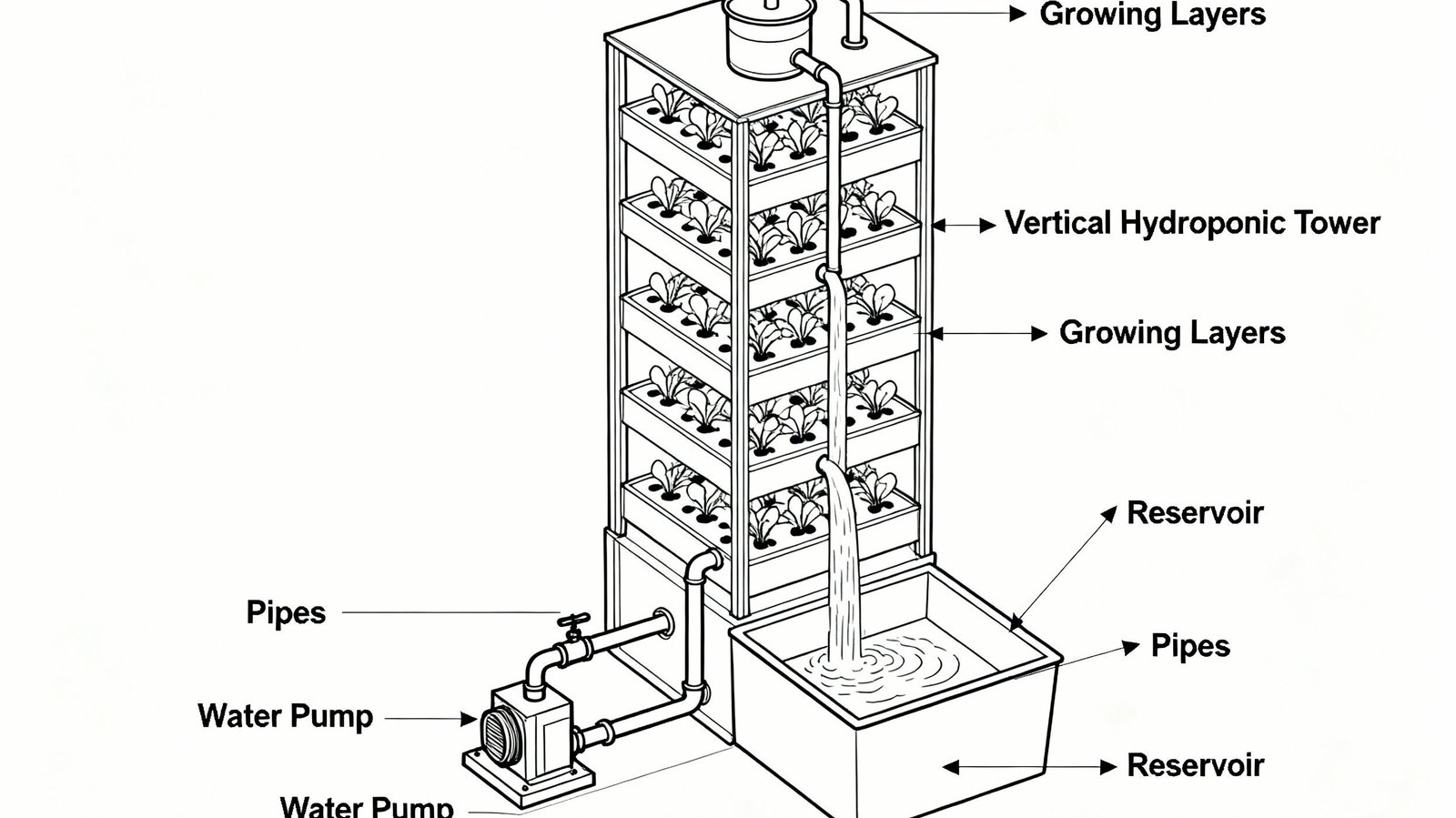
Imagine a vertical tower, about 2 meters high and occupying only 0.3 square meters, capable of nourishing over 50 heads of lettuce with a small 25-watt water pump. This is the magic of hydroponics, increasing space efficiency by 300%. Its core working principle is far from the complex engineering one might imagine; rather, it's an elegant and simple closed-loop life system. The entire process begins with a 20-liter reservoir containing precisely proportioned nutrient solution. The conductivity (EC value) is typically maintained between 1.2 and 1.8 mS/cm, and the pH value is intelligently controlled within the optimal range of 5.5 to 6.5. A small submersible pump delivers the nutrient solution from the bottom to a distributor at the top of the tower at a flow rate of 200-400 liters per hour.
Under gravity, the nutrient solution flows gently like rainwater, at a rate of about 1-2 liters per minute, slowly flowing down specially designed channels or pipes inside the tower. The key to this design lies in the fact that as the nutrient solution flows through the plant roots in each planting hole, it forms a moist film less than 1 mm thick. This ensures that the roots receive sufficient water and nutrients (nitrogen, phosphorus, potassium, etc. concentration errors not exceeding 5%) while also being exposed to air, absorbing up to 21% oxygen, which is about 70% higher than the oxygen content of roots grown in traditional soil. The entire process cycles every 15 minutes, with each cycle lasting 5-10 minutes. This intermittent irrigation strategy reduces pump energy consumption by 40% and effectively prevents root rot. The essence of the hydroponic tower how it works is to construct this efficient, water-saving dual nutrient and oxygen delivery cycle.
 Light and environmental control are another crucial pillar. For leafy vegetables, it typically requires LED light sources with a photoluminescence flux density (PPFD) of 150-250 μmol/m²/s for 12-16 hours daily, with the ambient temperature maintained between 18-24°C and humidity between 60%-70%. These parameters can be automated through an integrated controller costing approximately 1000 RMB. Users simply set thresholds via a mobile app, and the system automatically starts and stops the equipment, reducing management time from an average of one hour per day in traditional gardening to less than one hour per week. For example, in many vertical farms in Dubai, this automated hydroponic tower system has successfully achieved a rapid 21-day lettuce production cycle in desert environments with outdoor temperatures reaching 45°C, reducing water consumption by 95%.
So, how effective is the cultivation? Taking common butter lettuce as an example, in a hydroponic tower with 24 planting holes, it takes only 28 days from seedling transplanting to harvest, with an average weight of 180 grams per plant and an annual yield of over 90 kilograms per tower. Compared to traditional soil cultivation, the growth cycle is shortened by about 30%, and the yield density is increased nearly 10 times. Maintenance costs are also extremely transparent: monthly electricity costs are approximately 15-30 RMB, nutrient solution replenishment costs are about 20 RMB, and the initial investment for a home-scale hydroponic tower is typically between 1500 and 5000 RMB. Popular brands on the market, such as AeroGarden or TowerPai, have minimized complexity in their product designs. Modular components result in an installation success rate exceeding 98%, allowing even gardening novices to complete setup within an hour.
Therefore, once you understand the core of how a hydroponic tower works—a sophisticated closed loop consisting of pumps, pipes, nutrient solutions, and intelligent controls—you'll find the process resembles a well-designed "plant vending machine." Complex technological logic has been encapsulated in a user-friendly interface. This is not only a revolution in urban agriculture but also simplifies sustainable lifestyles into readily accessible daily practices, enabling everyone to become a green supplier for their own table with a failure rate of less than 5%.
Light and environmental control are another crucial pillar. For leafy vegetables, it typically requires LED light sources with a photoluminescence flux density (PPFD) of 150-250 μmol/m²/s for 12-16 hours daily, with the ambient temperature maintained between 18-24°C and humidity between 60%-70%. These parameters can be automated through an integrated controller costing approximately 1000 RMB. Users simply set thresholds via a mobile app, and the system automatically starts and stops the equipment, reducing management time from an average of one hour per day in traditional gardening to less than one hour per week. For example, in many vertical farms in Dubai, this automated hydroponic tower system has successfully achieved a rapid 21-day lettuce production cycle in desert environments with outdoor temperatures reaching 45°C, reducing water consumption by 95%.
So, how effective is the cultivation? Taking common butter lettuce as an example, in a hydroponic tower with 24 planting holes, it takes only 28 days from seedling transplanting to harvest, with an average weight of 180 grams per plant and an annual yield of over 90 kilograms per tower. Compared to traditional soil cultivation, the growth cycle is shortened by about 30%, and the yield density is increased nearly 10 times. Maintenance costs are also extremely transparent: monthly electricity costs are approximately 15-30 RMB, nutrient solution replenishment costs are about 20 RMB, and the initial investment for a home-scale hydroponic tower is typically between 1500 and 5000 RMB. Popular brands on the market, such as AeroGarden or TowerPai, have minimized complexity in their product designs. Modular components result in an installation success rate exceeding 98%, allowing even gardening novices to complete setup within an hour.
Therefore, once you understand the core of how a hydroponic tower works—a sophisticated closed loop consisting of pumps, pipes, nutrient solutions, and intelligent controls—you'll find the process resembles a well-designed "plant vending machine." Complex technological logic has been encapsulated in a user-friendly interface. This is not only a revolution in urban agriculture but also simplifies sustainable lifestyles into readily accessible daily practices, enabling everyone to become a green supplier for their own table with a failure rate of less than 5%.
Light and environmental control are another crucial pillar. For leafy vegetables, it typically requires LED light sources with a photoluminescence flux density (PPFD) of 150-250 μmol/m²/s for 12-16 hours daily, with the ambient temperature maintained between 18-24°C and humidity between 60%-70%. These parameters can be automated through an integrated controller costing approximately 1000 RMB. Users simply set thresholds via a mobile app, and the system automatically starts and stops the equipment, reducing management time from an average of one hour per day in traditional gardening to less than one hour per week. For example, in many vertical farms in Dubai, this automated hydroponic tower system has successfully achieved a rapid 21-day lettuce production cycle in desert environments with outdoor temperatures reaching 45°C, reducing water consumption by 95%.
So, how effective is the cultivation? Taking common butter lettuce as an example, in a hydroponic tower with 24 planting holes, it takes only 28 days from seedling transplanting to harvest, with an average weight of 180 grams per plant and an annual yield of over 90 kilograms per tower. Compared to traditional soil cultivation, the growth cycle is shortened by about 30%, and the yield density is increased nearly 10 times. Maintenance costs are also extremely transparent: monthly electricity costs are approximately 15-30 RMB, nutrient solution replenishment costs are about 20 RMB, and the initial investment for a home-scale hydroponic tower is typically between 1500 and 5000 RMB. Popular brands on the market, such as AeroGarden or TowerPai, have minimized complexity in their product designs. Modular components result in an installation success rate exceeding 98%, allowing even gardening novices to complete setup within an hour.
Therefore, once you understand the core of how a hydroponic tower works—a sophisticated closed loop consisting of pumps, pipes, nutrient solutions, and intelligent controls—you'll find the process resembles a well-designed "plant vending machine." Complex technological logic has been encapsulated in a user-friendly interface. This is not only a revolution in urban agriculture but also simplifies sustainable lifestyles into readily accessible daily practices, enabling everyone to become a green supplier for their own table with a failure rate of less than 5%.
Working with Richard
Need a homepage that actually converts?
A 30-minute strategy call is the fastest way to find out whether your homepage, pricing page or product narrative is leaving revenue on the table — and what the rewrite would look like.